International Conference on Electrical, Computer and Communication Technologies (ECCT 2026)
Publication Partner

Technical Partner

Important Dates
Paper Submission
Full submissions due
Notification
Review results
Camera-Ready
Final papers due
Registration Deadline
Discounted rates
Conference
Main event
All deadlines are at 11:59 PM AoE (Anywhere on Earth)
Acknowledgement
About The Conference
Theme: Technology for a Transformative Future
The International Conference on Electrical, Computer and Communications Technologies (ECCT 2026) will be held on May 7-9, 2026, in Dhaka, Bangladesh, jointly organized by the Department of Electrical and Electronic Engineering (EEE) and the Department of Computer Science and Engineering (CSE) of Dhaka International University, in collaboration with the Bangladesh Computer Society and the Center for Intelligent Computing. IEEE Computer Society will be the technical partner of ECCT 2026.
ECCT 2026 aims to bring together researchers, scholars, and professionals from around the world to exchange knowledge, share breakthroughs, and explore recent advances across the broad spectrum of electrical, computer, and communication technologies. The conference welcomes original contributions in a wide range of areas including power and energy systems, control and automation, electronic devices, communication networks, signal and image processing, computing architectures, intelligent systems, software technologies, data analytics, cybersecurity, embedded systems, and next-generation computing paradigms.
As rapid technological innovation continues to reshape our world, ECCT 2026 serves as a timely platform to discuss theoretical developments, practical applications, and interdisciplinary research that drive sustainable and transformative technological growth. The conference encourages forward-looking ideas that address real-world challenges and contribute to the evolution of science, engineering, and digital society. Accepted and presented papers will be submitted for possible inclusion at either Atlantis Press (Springer Nature) or Taylor and Francis Books, indexed by different reputable indexing services such as Scopus, DBLP etc. We warmly welcome you to ECCT 2026, where ideas, technologies, and vision for the future come together.
Networking Opportunities
Engage with a vibrant community of researchers, professionals, and scholars from around the world to foster academic and industry collaborations.
Knowledge Exchange
Explore groundbreaking ideas through keynote speeches, technical sessions, poster presentations, and expert panels spanning electrical, computer, and communication technologies.
Publication Opportunities
All accepted and presented papers at ECCT 2026 will be considered for publication in either Atlantis Press (Springer Nature) or Taylor and Francis Books, indexed by different reputable indexing services such as Scopus, DBLP etc.
Call For Papers
We invite high-quality original research papers for ECCT 2026
Topics of Interest
Papers are solicited in, but not limited to, the following areas:
Focus: Modern energy technologies, automation, and sustainable power infrastructure.
- Smart Grid Systems and Architectures.
- Renewable Energy Integration and Forecasting.
- Power System Analysis, Control, and Protection.
- Electric Vehicles and Charging Infrastructure.
- Energy Storage Technologies and Battery Management.
- Power Electronics and Converters.
- Grid Automation and Distributed Generation.
- Microgrids and Energy Resilience.
Focus: Theoretical and applied aspects of computing, software engineering, and modern computational platforms.
- Algorithms, Computational Complexity, and Optimization.
- Software Development Methodologies and DevOps.
- Cloud Computing and Virtualization.
- Edge and Fog Computing.
- Programming Languages and Compiler Design.
- Human-Computer Interaction and UX Design.
- Distributed and Parallel Computing.
- Quantum and High-Performance Computing.
Focus: Next-generation communication technologies and resilient network infrastructures.
- 5G/6G and Future Wireless Communication Systems.
- Optical and Satellite Communications.
- IoT and Machine-to-Machine Communication.
- Antennas, Propagation, and Microwave Technologies.
- Network Architecture, Protocols, and Performance.
- Software-Defined Networking (SDN) and Network Slicing.
- Vehicular Networks and Mobile Ad Hoc Networks (MANETs).
- Network Security and Quality of Service (QoS).
Focus: Foundational techniques and hardware platforms for real-time, low-power, and efficient system design.
- Digital and Adaptive Signal Processing.
- Image, Audio, and Video Processing.
- Real-Time Embedded Systems and IoT Devices.
- FPGA, ASIC, and SoC Design.
- Biomedical Signal Acquisition and Processing.
- VLSI Testing, Synthesis, and Design Automation.
- Hardware-Software Co-Design.
- Low-Power Design Techniques and Reliability.
Focus: Secure systems, data-centric innovation, and advanced technologies across emerging domains.
- Cryptography, Authentication, and Secure Communication Protocols.
- Cybersecurity Models, Threat Detection, and Digital Forensics.
- Data Science, Big Data Analytics, and Visualization Techniques.
- Deep Learning for Classification, Prediction, and Anomaly Detection.
- Blockchain Technologies for Security and Transparency.
- Green Computing and Energy-Efficient Algorithms.
- Privacy-Preserving Computing and Secure Data Sharing.
- Smart City Infrastructure and Intelligent Transportation Systems.
- e-Health, Assistive Technologies, and Digital Governance Platforms.
- Robotics, Automation, and AI-Based Control in Real-World Environments.
Manuscript Preparation
All submissions must be original, not under consideration elsewhere, and should not exceed 15 pages.
Detailed instructions and templates are available at: Atlantis Press (Springer Nature) Author's Kit Guidelines
Submission Information
The Microsoft CMT service was used for managing the peer-reviewing process for this conference. This service was provided for free by Microsoft and they bore all expenses, including costs for Azure cloud services as well as for software development and support
Important Dates
Contact Information
Prof. Dr. Mohammad Shamsul Arefin
General Chair, ECCT 2026
Phone: +8801716890204
Email: [email protected]
Keynote and Invited Talks
Groundbreaking presentations and pioneering research insights
that define the future of technology
Keynote Speakers
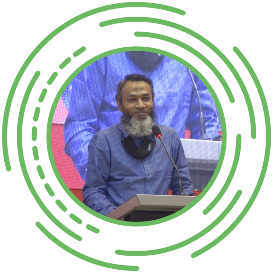
Al And Advances in The Medical Sector (An Incomplete Tale)
Dr. M. Sohel Rahman
Professor
Department of Computer Science and Engineering, Bangladesh University of Engineering and Technology, Bangladesh
Artificial Intelligence (Al) promises to revolutionize the medical sector. With tremendous advances in machine learning and deep learning algorithms, we now have the ability to make more decisions based on data leveraging its capability to analyze vast amounts of data quickly and accurately. It is not possible to cover the advancement of Al in the medical field in just one talk. Therefore, in this talk we will focus on some unique and state of the art technologies like CRISPR/Cas9 and present some recent research progresses thereon. The overarching goal of this talk would be to discuss the enormous prospect of Al, particularly that of ML and DL techniques and how these can shape the future of the medical sector.
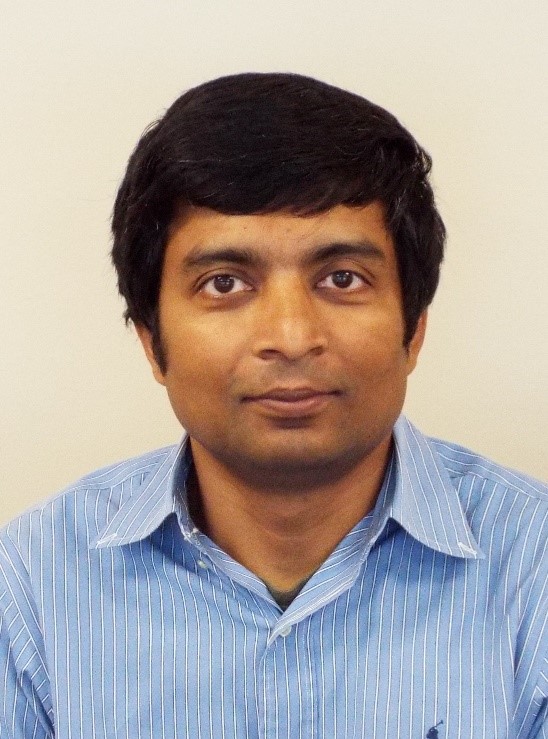
Generative Al and Large Language Models (LLMs) for Cyber-Security and Political Sciences Transportation Security and Resiliency
Professor Latifur Khan
Fellow of IEEE, AAAS, IET, BCS
Department of Computer Science, University of Texas at Dallas (UT Dallas), USA
This presentation explores the transformative potential of generative artificial intelligence-particularly large language models (LLMs)-in addressing critical challenges in domains such as cybersecurity, intelligent transportation systems (ITS) and political sciences. Generative Al-Enhanced Threat Modeling in ITS: We develop an LLM-based framework to automate threat modeling for complex intelligent transportation systems by mapping information flows to MITRE ATT&CK techniques and NIST Cybersecurity Framework controls. The approach evaluates multiple Al methods, including zero-shot learning, RAG, multimodal reasoning, in-context learning, and fine-tuning. Policy Analysis for Secure Transportation Systems: This project enhances transportation cybersecurity policy using Al-driven legal analysis and stakeholder engagement. Building on the TraCR Al system, it integrates U.S. and international regulations and uses agentic Al and graph-based retrieval to identify policy gaps and propose improvements for data security and privacy in autonomous transportation. Conflict and Political Violence Monitoring: We developed ConfliBERT, a domain-specific pretrained language model for analyzing conflict and political violence data, which outperforms general-purpose LLMs in classification and question-answering tasks and has over 14,000 downloads on GitHub and Hugging Face. We also proposed ensemble-based active learning methods-Ensemble Union and Ensemble Intersection-that combine multiple heuristics to improve sample selection. Experiments on the United Nations Parallel Corpus show these approaches achieve performance comparable to full- dataset training while requiring far fewer labeled examples. Cybersecurity Intelligence Extraction: In partnership with researchers at NIST, we automated the extraction of cyber-attack techniques from Common Vulnerabilities and Exposures (CVE) and Cyber Threat Intelligence (CTI) reports. These extracted techniques are mapped to the MITRE ATT&CK framework using a combination of LLMs and active learning strategies. We have shown how this structured, machine- assisted analysis enhances the ability of security analysts to respond to emerging threats more effectively.
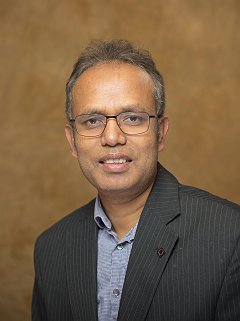
Cultivating Global Talent: Mentorship and Research Pipelines from Bangladesh
Dr. Chanchal Roy
Professor
Department of Computer Science and Engineering, University of Saskatchewan, Canada
Bangladesh has emerged as a strong and reliable source of high-caliber software engineering graduates. This talk focuses on the University of Saskatchewan's experience recruiting and mentoring students from institutions such as Khulna University, BRAC University, KUET, IUT, EWU, and CUET. It highlights effective mentorship practices, student growth, and how these graduates transition into successful research careers in North America. Emphasis is placed on building supportive supervision structures, identifying promising applicants, and sustaining long-term academic pipelines. Students have contributed to a range of software engineering research areas, including empirical studies, clone detection, and data-driven development, with growing use of LLM-based techniques. The talk briefly touches on these research directions while focusing primarily on lessons learned in mentorship and international collaboration. It concludes with practical guidance on fostering cross-border partnerships and expanding recruitment to strengthen diversity and global engagement in software engineering.
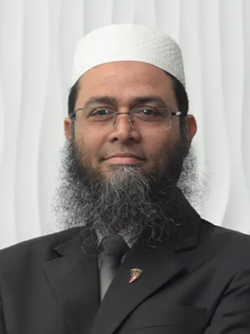
Long duration energy storage with advanced materials: Role of Al in optimization of synthesis and storage
Dr. Saidur Rahman
Professor & Head
Research Centre for Nano-Materials and Energy Technology (RCNMET) Sunway University, Malaysia
Long-Duration Energy Storage (LDES) is critical for grid stability, bridging the gap between intermittent renewable generation and continuous demand. Advanced materials (i.e. MXene, graphene, CNTs) are at the forefront of this shift, enhancing efficiency, cycle life, and cost-effectiveness far beyond the capabilities of traditional lithium-ion batteries. In this speech, advanced materials that has shown outstanding energy storage behaviour will be explored and cost reduction to the development of these materials will be highlighted. Al in optimization of synthesis parameters, storage behaviour will also be explored.
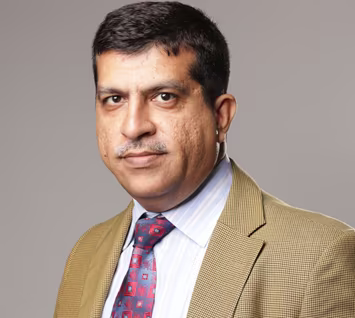
Digital Deception: Fake Vs. Real
Prof. Tariq R. Soomro, PhD
Rector, Institute of Business Management (IoBM), Karachi, Pakistan
IEEE CS R10 Regional Coordinator | Senior Member IEEE, CS, & EdSoc | Distinguished Contributor (2021) & Visitor (2021-23) | Former Chair IEEE Karachi (2024-25)
To be added.
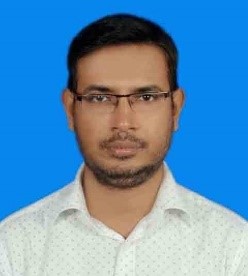
The Art of Sparsity for Higher Order Tensors
Dr. K. M. Azharul Hasan
Professor
Department of Computer Science and Engineering, Khulna University of Engineering & Technology, Bangladesh
Higher-order tensors have emerged as a powerful and expressive framework for modeling multi-dimensional and multi-modal data across domains such as Machine learning, recommender systems, natural language processing, and computer vision. Despite their representational richness, their practical adoption is often limited by the exponential growth in storage and computational requirements-commonly known as the curse of dimensionality. This talk explores the art of sparsity as a principled and transformative approach to overcoming these challenges. By leveraging the inherent structure, redundancy, and low-dimensional patterns within real-world data, sparsity enables efficient representation and scalable learning in higher-order tensor models. Sparsity-driven techniques can be seamlessly integrated into modern machine learning frameworks, particularly in applications such as recommender systems and information filtering. Empirical evidence demonstrates that sparsity-aware tensor models not only reduce computational complexity but also achieve competitive, and often superior, performance compared to dense approaches. Beyond efficiency, this talk argues that sparsity should be viewed not merely as a constraint, but as a fundamental design paradigm-one that balances expressiveness, interpretability, and scalability in high-dimensional learning.
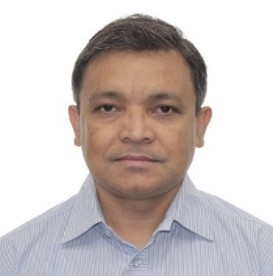
Enhancing Online Learning Through Al-Based Student Engagement Detection
Dr. Ali Dewan
Associate Professor
School of Computing and Information Systems, Faculty of Science and Technology, Athabasca University, Canada.
In this presentation, I will discuss some Al-driven solutions that aim to improve student engagement in online learning. Student engagement detection systems identify the type and level of engagement using various modalities. I will discuss several ways in which Al and machine learning techniques are being applied in these systems to support online learners, along with the associated challenges and future research opportunities. The role of explainable Al and the impact of bias in training data used for machine learning techniques will also be examined in the context of these applications in online education.
Invited Talks

Augmented and Virtual Reality in Education: From Research Insights to Real-World Impact and Future Directions
Md. Sabir Hossain
Assistant Professor
Department of Computer Science and Engineering Chittagong University of Engineering and Technology, Bangladesh
Augmented Reality (AR) and Virtual Reality (VR) are transforming education by enabling immersive, interactive, and learner-centered experiences. This invited talk presents a comprehensive overview of AR/VR in education, focusing on bridging the gap between research innovations and real-world deployment. The talk highlights empirical insights from AR-based educational applications developed for early learning, where controlled studies demonstrate significant improvements in learning outcomes, achieving approximately 30-33% performance gains alongside enhanced student engagement and motivation. It further introduces the integration of AR with machine learning through systems such as Learn2Write, which enables real-time handwriting evaluation using deep learning and marker-less AR, illustrating the potential of intelligent and adaptive learning systems. From a technical perspective, the session discusses system architectures, design principles, and implementation strategies for developing scalable AR/VR-based educational environments. Key challenges-including scalability, device constraints, usability, and adoption barriers are critically examined, particularly in the context of developing regions. Finally, the talk outlines future research directions, emphasizing the convergence of AR/VR with artificial intelligence, multimodal learning, and explainable Al (XAI). It also highlights the importance of collaborative platforms and ecosystem-driven deployment models to translate research into scalable, real-world educational impact, fostering the next generation of intelligent and immersive learning systems.

LLM Applications in Software Engineering and Greening Them for a Sustainable Future
Dr. Banani Roy
Associate Professor
Department of Computer Science and Engineering University of Saskatchewan, Canada
Large Language Models (LLMs) are transforming software engineering by supporting program comprehension, code summarization, and knowledge transfer across developers and systems. However, their high computational cost raises concerns about scalability and environmental sustainability. We advocate a green LLM pipeline that compresses large models into efficient student models while preserving their core capabilities. The pipeline integrates knowledge distillation, structured pruning, and low-bit quantization to reduce model size, energy consumption, and deployment overhead. This approach demonstrates that LLMs can remain effective for software engineering tasks while significantly lowering their environmental footprint, making sustainable Al a practical goal rather than a trade-off.
Important Dates
Mark your calendar with these key conference deadlines
Paper Submission Deadline
Full and detailed submissions
Paper Submission Deadline
Full and detailed submissions
Notification of Acceptance
Authors will be notified of the review results
Camera-Ready Submission
Final versions of accepted papers
Camera-Ready Submission
Final versions of accepted papers
Registration Deadline
Last day for discounted registration rates
Conference Dates
conference sessions and events
Conference Dates
Conference sessions and events
All deadlines are 11:59 PM Anywhere on Earth (AoE)
Add to CalendarVenue & Travel
Join us in Dhaka, Bangladesh - The Vibrant Capital
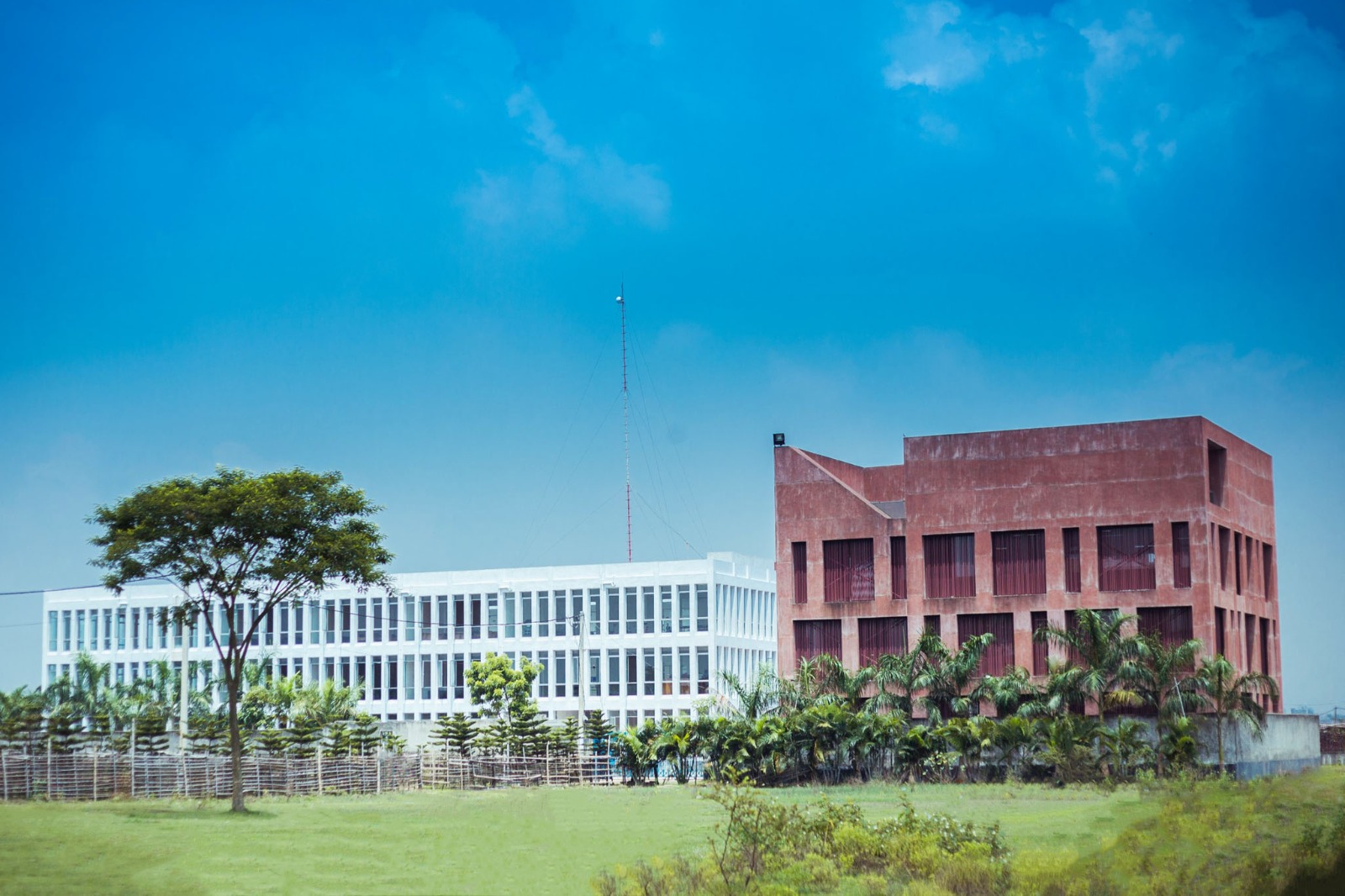
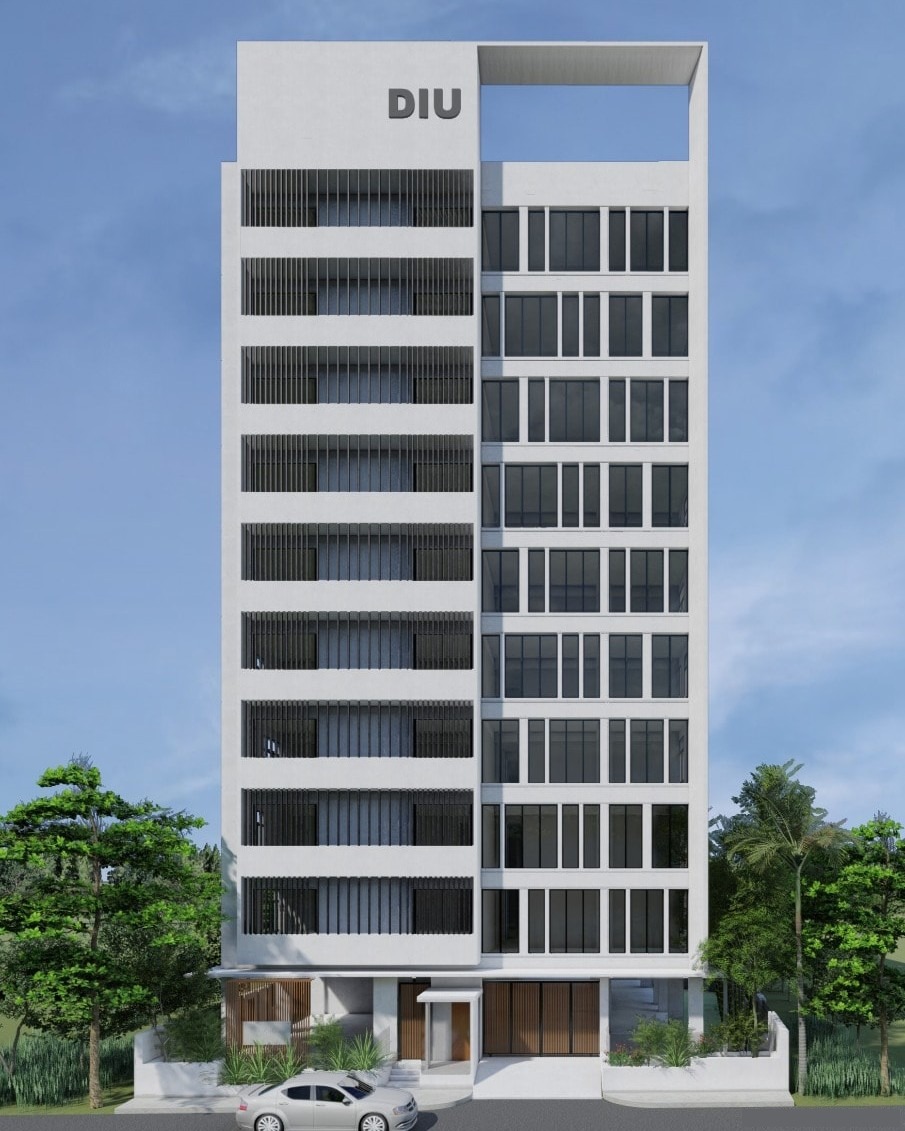
Dhaka International University
The ECCT 2026 will be held at Dhaka International University, a prominent educational institution located in the heart of Dhaka, offering modern facilities for conferences and events.
Travel Information
By Air: Hazrat Shahjalal International Airport (DAC) is located 17 km from Dhaka city center, with connections to major international cities. From the airport, you can take taxis, ride-sharing services, or airport shuttles to reach the venue.
By Train: Kamalapur Railway Station is Dhaka’s main railway hub, connecting to various parts of Bangladesh. The venue is accessible by taxi or local transport from the station.
Public Transportation: Dhaka offers rickshaws, CNG auto-rickshaws, and buses for local travel. The venue is near Banani, accessible via local transport or a short taxi ride.
Accommodation
We recommend the following hotels near Dhaka International University for your stay:
- Hotel Shuktara Dhaka
1.9 km from the venue, approximately $30/night, features fitness center, free parking, and restaurant
- HOTEL STUDiO23
1.1 km from World University of Bangladesh (near DIU), approximately $25/night, offers free WiFi and shared lounge
- The Ambassador Hotel Dhaka
0.5 km from United International University (near DIU), approximately $40/night, includes terrace and restaurant
Please contact the hotels directly to book your stay and inquire about availability.
Visa Information
Check if you need a visa to enter Bangladesh. We provide invitation letters for registered participants to facilitate visa applications.
Currency & Banking
Bangladesh uses the Bangladeshi Taka (BDT). ATMs are widely available, and major credit cards are accepted at most hotels and restaurants in Dhaka.
Weather
Dhaka in June experiences warm and humid weather with average temperatures ranging from 26°C to 33°C (79°F to 91°F), with occasional rainfall.